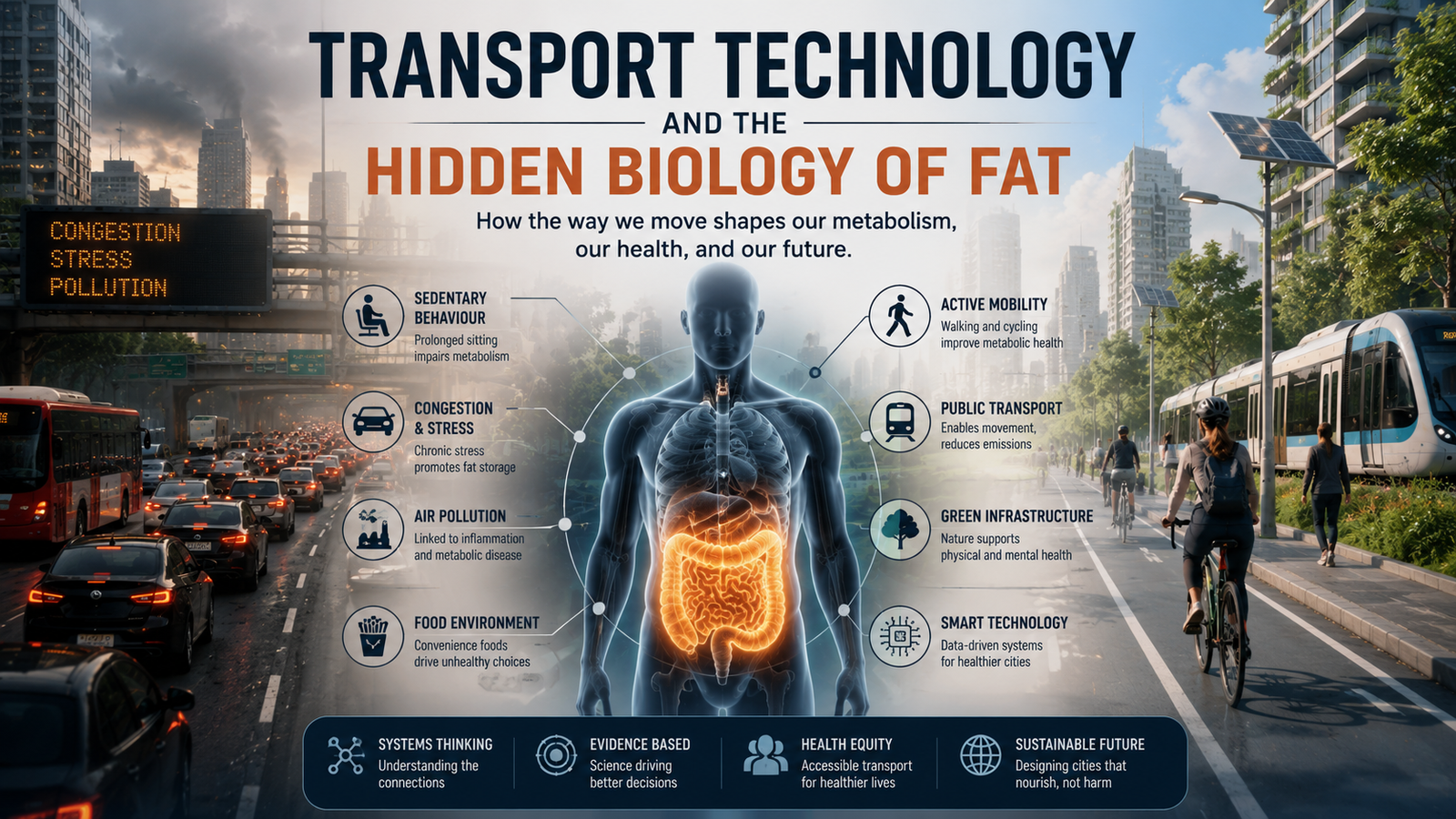
This paper presents a systems-level analysis of visceral adiposity and associated metabolic dysfunction, reframing these conditions not as isolated physiological failures but as predictable outputs of a complex, tightly coupled biological system operating under altered environmental inputs. Drawing on interdisciplinary evidence from endocrinology, metabolism, pharmacology, and systems theory, the study evaluates the effectiveness and limitations of current intervention strategies, including hormonal manipulation, component removal (androgen deprivation), and pharmacological modulation. Analysis of large-scale endocrine reconfiguration demonstrates that while hormonal interventions can alter system outputs such as fat distribution, they do so at the cost of broader systemic trade-offs, including increased total fat mass and reduced lean mass. Similarly, models of androgen deprivation reveal degradation of system performance, characterised by increased adiposity, reduced metabolic capacity, and elevated risk of metabolic disease. Pharmacological approaches, including incretin-based therapies and insulin sensitisers, show greater effectiveness by modifying system inputs and enhancing processing efficiency; however, these function as compensatory overlays and require continuous application, without resolving underlying drivers. A root cause analysis identifies a set of persistent environmental inputs—continuous caloric availability, reduced physical activity, chronic stress signalling, thermal stability, and circadian disruption—as the dominant determinants of system behaviour. These inputs operate as sustained control signals, shaping metabolic outputs through established regulatory pathways. Within this framework, visceral adiposity emerges as a system-consistent response rather than a defect in system design. The paper concludes that sustainable modification of metabolic outcomes cannot be achieved through internal system reconfiguration alone. Instead, effective intervention requires alignment of environmental inputs with system requirements, shifting focus from modifying the body to redesigning the conditions under which it operates. This systems-based perspective provides a unifying framework for understanding metabolic disease and has implications for clinical strategy, public health design, and interdisciplinary research into complex biological systems.
Environmental Inputs and System Behaviour: A Systems-Level Analysis of Visceral Adiposity and Metabolic Dysfunction
Overview
Key Findings
- Visceral adiposity can be understood as a system-level output rather than an isolated failure of the body.
- Modern environmental inputs continuously signal energy abundance, reduced activity, chronic stress, thermal stability and disrupted timing.
- Attempts to change fat distribution through hormonal manipulation are limited because the endocrine system is tightly coupled and produces system-wide trade-offs.
- Androgen deprivation illustrates that removing a core regulatory signal can reduce muscle mass, lower metabolic capacity and increase adiposity.
- Pharmacological interventions can improve system behaviour, but they function mainly as compensatory overlays while the underlying inputs remain unchanged.
- Sustainable metabolic improvement requires redesigning the environment so that its inputs align with the body’s metabolic requirements.
Implications
This paper reframes metabolic dysfunction as a systems-design problem rather than simply a matter of individual failure or isolated physiology.
The practical implication is that the body often behaves consistently with the inputs it receives. If the environment supplies constant calories, little movement, chronic stress, stable thermal comfort and poor sleep timing, the system is likely to shift toward storage, insulin resistance and visceral adiposity.
Medical or pharmacological interventions may be valuable, but they cannot fully solve the problem while the operating environment remains unchanged. They can reduce appetite, improve glucose handling or modify signalling, but they do not remove the underlying environmental drivers.
The strongest long-term strategy is therefore environmental redesign: structured food availability, embedded daily movement, stress recovery, controlled thermal variation, stable sleep rhythms and reduced digital overstimulation.
In systems terms, the aim is not to force the body to behave differently while leaving the inputs unchanged. The aim is to change the inputs so that healthier outputs become the natural result.
Article
This paper presents a systems-level analysis of visceral adiposity and associated metabolic dysfunction, reframing these conditions not as isolated physiological failures but as predictable outputs of a complex, tightly coupled biological system operating under altered environmental inputs. Drawing on interdisciplinary evidence from endocrinology, metabolism, pharmacology, and systems theory, the study evaluates the effectiveness and limitations of current intervention strategies, including hormonal manipulation, component removal (androgen deprivation), and pharmacological modulation. Analysis of large-scale endocrine reconfiguration demonstrates that while hormonal interventions can alter system outputs such as fat distribution, they do so at the cost of broader systemic trade-offs, including increased total fat mass and reduced lean mass. Similarly, models of androgen deprivation reveal degradation of system performance, characterised by increased adiposity, reduced metabolic capacity, and elevated risk of metabolic disease. Pharmacological approaches, including incretin-based therapies and insulin sensitisers, show greater effectiveness by modifying system inputs and enhancing processing efficiency; however, these function as compensatory overlays and require continuous application, without resolving underlying drivers. A root cause analysis identifies a set of persistent environmental inputs-continuous caloric availability, reduced physical activity, chronic stress signalling, thermal stability, and circadian disruption-as the dominant determinants of system behaviour. These inputs operate as sustained control signals, shaping metabolic outputs through established regulatory pathways. Within this framework, visceral adiposity emerges as a system-consistent response rather than a defect in system design. The paper concludes that sustainable modification of metabolic outcomes cannot be achieved through internal system reconfiguration alone. Instead, effective intervention requires alignment of environmental inputs with system requirements, shifting focus from modifying the body to redesigning the conditions under which it operates. This systems-based perspective provides a unifying framework for understanding metabolic disease and has implications for clinical strategy, public health design, and interdisciplinary research into complex biological systems.
Related Research