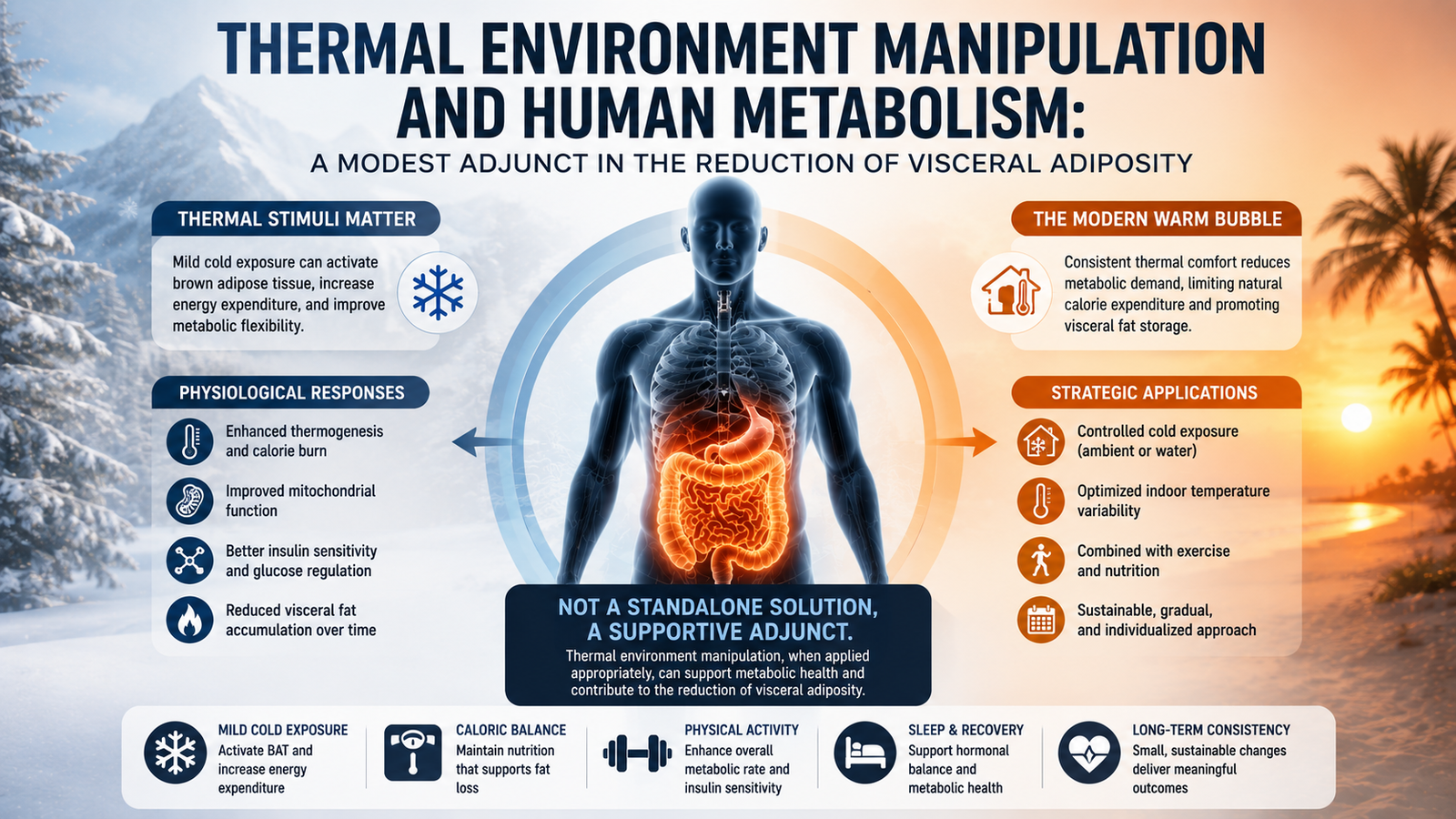
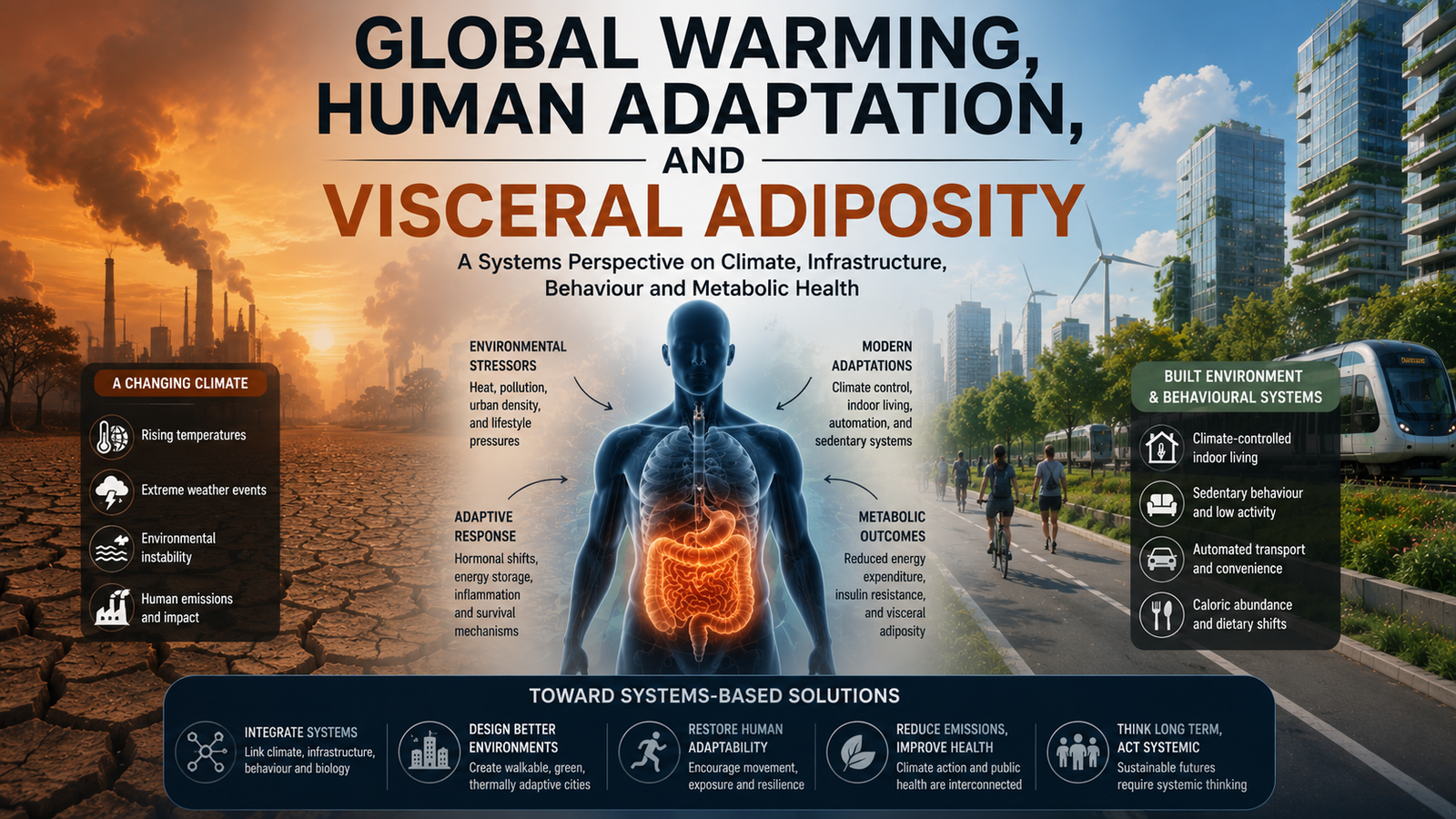
Sexual dimorphism in human fat distribution is well documented, with men tending toward greater visceral adiposity and women more commonly storing fat subcutaneously, particularly in gluteofemoral regions. These patterns are primarily shaped by hormonal and biological mechanisms. However, growing attention has been directed toward the broader environmental conditions that influence metabolic outcomes. This paper proposes that clothing—an everyday, persistent, and culturally structured element of the human environment—may function as a secondary modifier of physiological and behavioural factors associated with visceral adiposity. Drawing on established research in thermoregulation, biomechanics, endocrinology, and behavioural science, the analysis considers how clothing affects heat exchange, movement comfort, posture, breathing mechanics, and low‑level stress responses. Central to this discussion is the concept of clothing as a micro‑environment that interacts continuously with the body. The paper also examines how gendered clothing norms create different environmental exposures for men and women. Enclosed lower‑body garments commonly worn by men may contribute to localised heat retention and friction, while compression‑based garments and undergarments frequently worn by women may influence posture, respiratory patterns, and behavioural choices. These influences are not presented as primary drivers of visceral adiposity but as subtle, persistent modifiers operating within a multi‑factorial system. Additional environmental considerations—including clothing colour, climate interaction, and the relationship between digestive processes and external conditions— are explored. Practical implications include the potential value of looser, better‑ventilated garments and a reconsideration of restrictive clothing practices where appropriate. This work is written from the perspective of a technology leader applying systems‑level reasoning, informed in part by personal experience with pre‑diabetes. While AI tools assisted in drafting, all sources have been independently reviewed, and the conceptual framing reflects the author’s own synthesis. The paper concludes that clothing should be recognised as a modest but meaningful component of the wider environmental context influencing metabolic health, and as a factor worthy of further investigation.
Visceral Adiposity, Sexual Dimorphism, and the Built Environment
Overview
Key Findings
- Clothing functions as a continuous micro-environment that affects heat exchange, airflow, moisture, comfort and movement.
- Sexual differences in fat distribution are primarily biological and hormonal, but environmental factors may modify the conditions in which these patterns develop.
- Restrictive, tight or poorly ventilated clothing may reduce spontaneous movement, alter posture and discourage low-level activity.
- Gendered clothing norms expose men and women to different patterns of thermal burden, compression, movement constraint and social monitoring.
- Clothing-related discomfort may contribute to low-level stress, altered breathing patterns and behavioural vigilance.
- Clothing should be understood as a modest but persistent environmental modifier, not as a primary cause of visceral adiposity.
Implications
Clothing should be considered part of the wider built and bodily environment that shapes metabolic health.
The practical implication is not that any single garment causes visceral fat, but that persistent clothing-related effects may influence comfort, movement, thermal regulation and stress across daily life.
Health-focused clothing design should prioritise ventilation, freedom of movement, reduced compression and comfort, especially in sedentary or climate-controlled environments.
Gendered clothing expectations should be examined critically, because different norms may create different environmental exposures for men and women.
For individuals concerned about visceral adiposity or pre-diabetes, clothing choices may support healthier behaviour by making walking, standing, sitting, breathing and spontaneous movement easier. This should be treated as a complementary measure alongside diet, physical activity, muscle preservation and sleep.
Article
Sexual dimorphism in human fat distribution is well documented, with men tending toward greater visceral adiposity and women more commonly storing fat subcutaneously, particularly in gluteofemoral regions. These patterns are primarily shaped by hormonal and biological mechanisms. However, growing attention has been directed toward the broader environmental conditions that influence metabolic outcomes. This paper proposes that clothing-an everyday, persistent, and culturally structured element of the human environment-may function as a secondary modifier of physiological and behavioural factors associated with visceral adiposity. Drawing on established research in thermoregulation, biomechanics, endocrinology, and behavioural science, the analysis considers how clothing affects heat exchange, movement comfort, posture, breathing mechanics, and low-level stress responses. Central to this discussion is the concept of clothing as a micro-environment that interacts continuously with the body.
Related Research