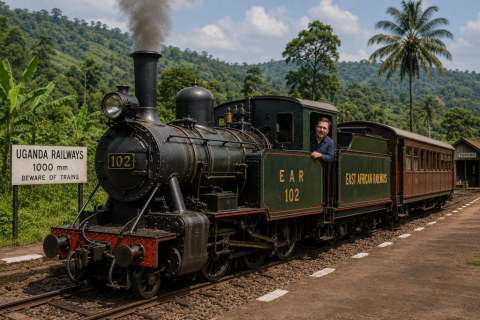
I am now involved with the Great Central Railway, one of the country’s leading heritage railways, where I am working with the Wagons renovation group.
My railway interest has moved from simply enjoying heritage railways to becoming actively involved in preservation work. I am particularly interested in the careful restoration and long-term maintenance of historic railway wagons, where patience, practical problem-solving, attention to detail and respect for the past all come together.
Wagon renovation is not glamorous work, but it is deeply meaningful. These vehicles were once part of the everyday working railway, carrying goods, materials and equipment across the country. Preserving them helps keep an important part of railway history alive, not merely as static exhibits, but as working reminders of how railways served communities, industry and daily life.
Coming from a background in technology leadership and systems thinking, I find heritage railway work both restorative and surprisingly familiar. A railway is itself a system: vehicles, people, tools, processes, maintenance, documentation, safety and long-term planning all have to work together. Although the environment is very different from the world of software and infrastructure, the underlying principles of reliability, care, process and continuity are very similar.
For me, volunteering at the Great Central Railway also provides a welcome contrast to the pressure of modern digital work. It is practical, physical, tangible and grounded. Instead of screens, meetings and abstract systems, there is wood, metal, paint, tools, history and a team of people working patiently to preserve something real.
I am still learning, but that is part of the appeal. Heritage railway restoration requires humility as well as enthusiasm. It is an opportunity to contribute, to gain practical skills, to support a worthwhile preservation effort, and to be part of keeping railway history alive for future generations.