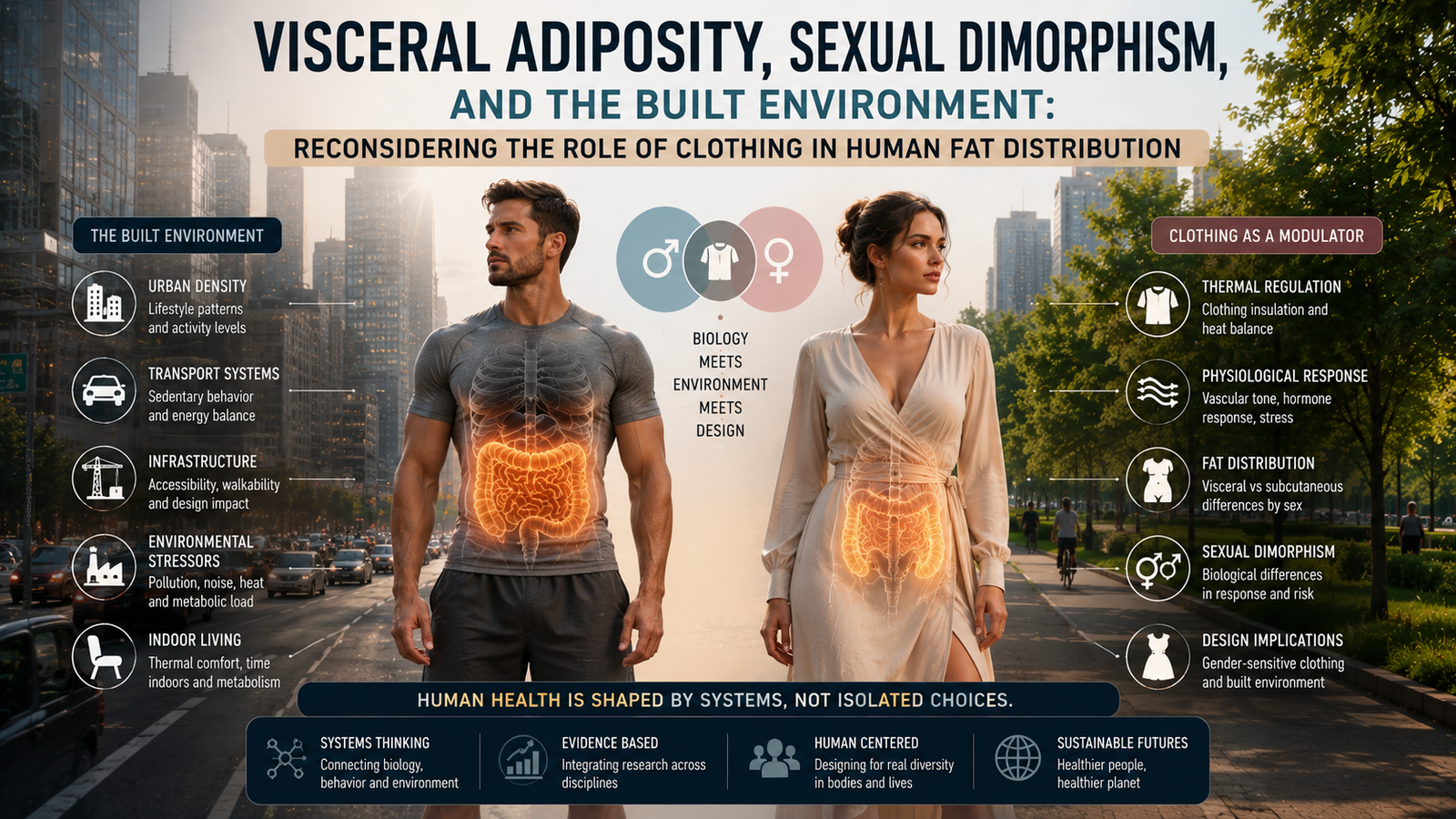
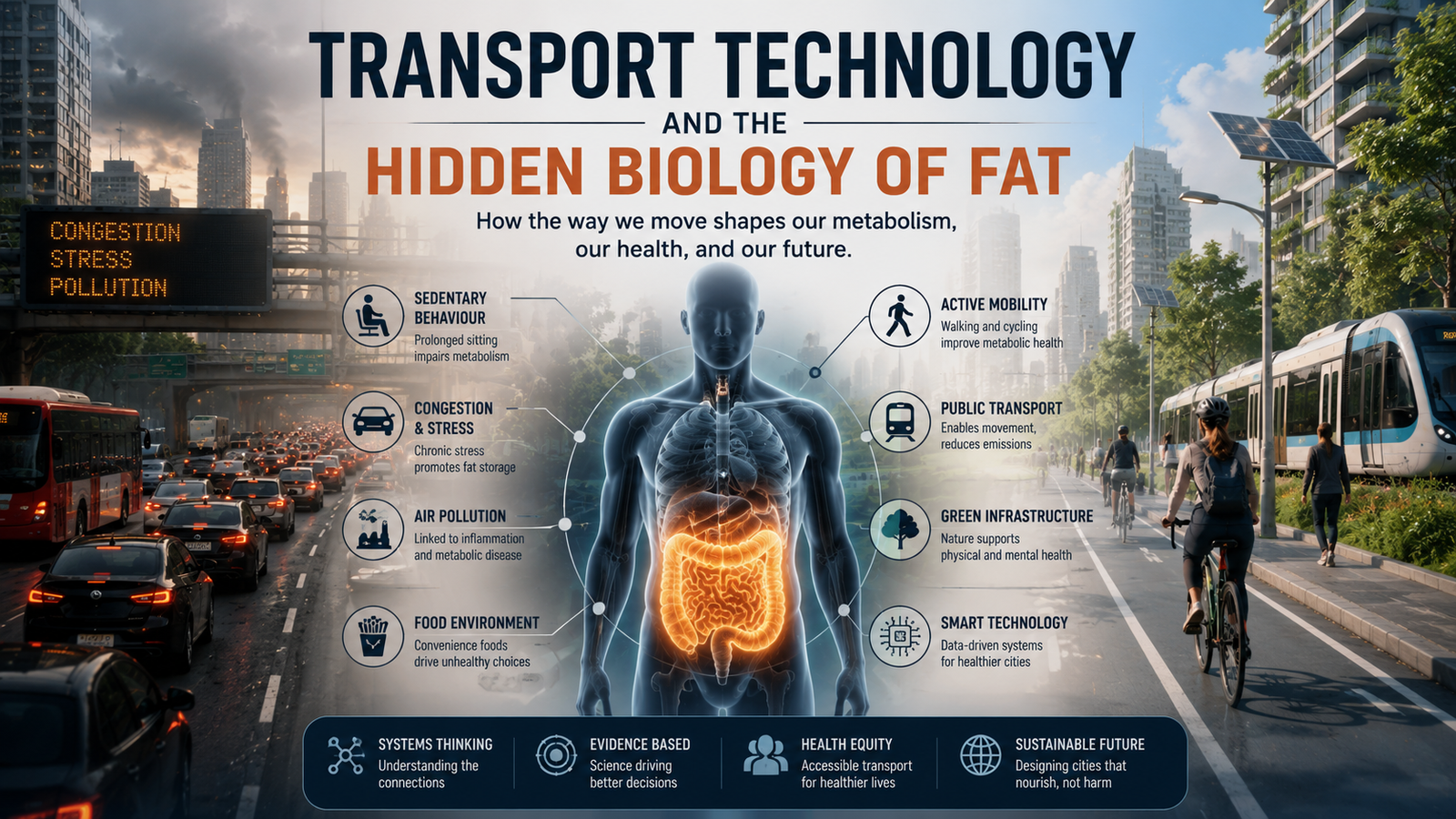
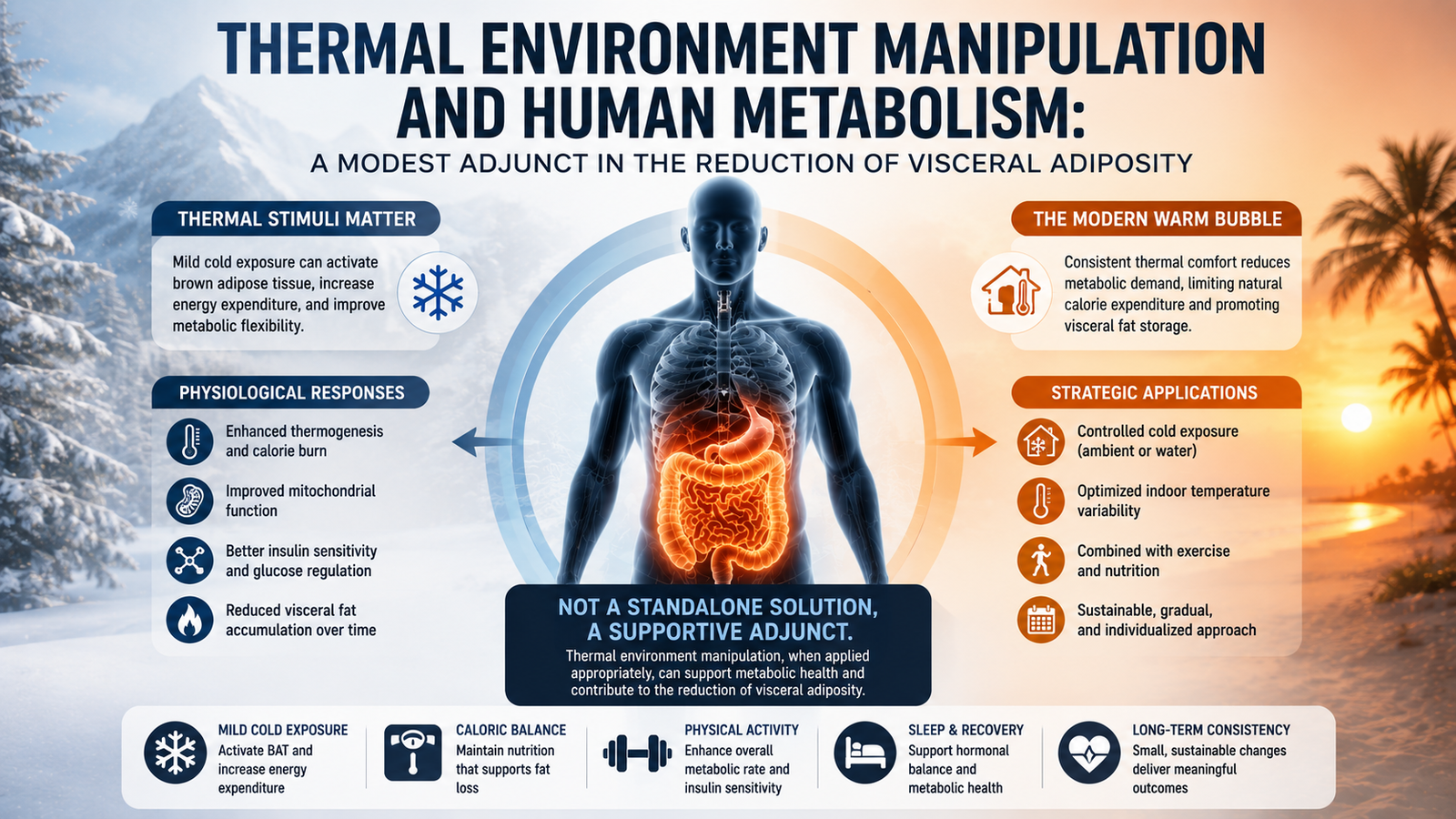
The relationship between modern environments and metabolic health has been widely examined in physiology, epidemiology, and public health. A substantial body of evidence links reduced physical activity, thermal stability, and chronic stress to adverse metabolic outcomes, including visceral adiposity, insulin resistance, and pre-diabetic states. This paper does not seek to replace those established findings. Rather, it offers a complementary systems-oriented interpretation, applying concepts from network science, systems engineering, and environmental design to the question of how constrained environments influence metabolic regulation. Written from the perspective of a Chief Technology Officer experienced in the design and analysis of distributed systems, the paper argues that human physiology may usefully be understood as a dynamic network dependent on flow, variability, and adaptive interaction with its surroundings. The central metaphor—“you can’t wear a skirt on the moon… or can you?”—is used not as a literal claim, but as a conceptual contrast between low-constraint environments, in which movement, thermal exchange, and behavioural autonomy are preserved, and highly constrained environments, in which these interactions are externally mediated. Across seven sections, the paper examines three principal pathways through which constrained environments may influence metabolic health: mechanical restriction of movement, suppression of thermal variability, and chronic activation of stress pathways. It further argues that modern terrestrial environments, and emerging AI- driven future systems, increasingly reproduce these constraints in attenuated but cumulative forms. The likely consequence is a shift in physiological behaviour toward reduced metabolic throughput, diminished adaptive flexibility, and increased visceral fat storage. The contribution of this paper lies in interpretation and integration rather than in primary biomedical discovery. By combining established biological literature with a systems framework, it proposes that metabolic dysfunction cannot be fully understood without considering the architecture of the environments in which human beings now live. The paper concludes that the prevention of visceral adiposity and related metabolic disease requires not only behavioural advice, but also deliberate design of environments that restore movement, variability, and autonomy.
You Can't Wear a Skirt on the Moon… or can you?
Overview
Key Findings
- Human physiology can be understood as a dynamic network that depends on movement, variability, flow and environmental interaction.
- Highly constrained environments reduce physical movement, thermal exchange and behavioural autonomy.
- Reduced skeletal muscle activity lowers glucose uptake and metabolic throughput, increasing the likelihood of energy storage.
- Constant thermal stability suppresses thermogenic activity and reduces adaptive metabolic stimulation.
- Chronic low-level stress and reduced autonomy may alter endocrine signalling in ways that favour central fat accumulation.
- Automation and AI-driven systems may further reduce human physical and cognitive engagement unless deliberately designed otherwise.
Implications
Modern environments should not be designed only for efficiency, comfort and automation. They should also preserve movement, variability, autonomy and direct human engagement.
The “skirt on the moon” metaphor is useful because it contrasts a low-constraint interface with a fully mediated environment. Space suits are necessary on the moon, but many modern terrestrial systems increasingly imitate that pattern by enclosing, controlling, automating and reducing human interaction with the environment.
The practical implication is that metabolic health requires better system design, not merely better personal discipline. Homes, workplaces, transport systems, digital systems and future AI-driven environments should be designed to keep people physically active, thermally responsive, cognitively engaged and locally autonomous.
For individuals concerned about visceral adiposity or pre-diabetes, the paper supports everyday practices that restore throughput: frequent movement, reduced sitting, exposure to mild thermal variation, walking, manual activity, less over-automation, and more control over one’s immediate environment.
Article
The relationship between modern environments and metabolic health has been widely examined in physiology, epidemiology, and public health. A substantial body of evidence links reduced physical activity, thermal stability, and chronic stress to adverse metabolic outcomes, including visceral adiposity, insulin resistance, and pre-diabetic states. This paper does not seek to replace those established findings. Rather, it offers a complementary systems-oriented interpretation, applying concepts from network science, systems engineering, and environmental design to the question of how constrained environments influence metabolic regulation. Written from the perspective of a Chief Technology Officer experienced in the design and analysis of distributed systems, the paper argues that human physiology may usefully be understood as a dynamic network dependent on flow, variability, and adaptive interaction with its surroundings. The central metaphor—“you can’t wear a skirt on the moon… or can you?”—is used not as a literal claim, but as a conceptual contrast between low-constraint environments, in which movement, thermal exchange, and behavioural autonomy are preserved, and highly constrained environments, in which these interactions are externally mediated. Across seven sections, the paper examines three principal pathways through which constrained environments may influence metabolic health: mechanical restriction of movement, suppression of thermal variability, and chronic activation of stress pathways. It further argues that modern terrestrial environments, and emerging AI-driven future systems, increasingly reproduce these constraints in attenuated but cumulative forms. The likely consequence is a shift in physiological behaviour toward reduced metabolic throughput, diminished adaptive flexibility, and increased visceral fat storage. The contribution of this paper lies in interpretation and integration rather than in primary biomedical discovery. By combining established biological literature with a systems framework, it proposes that metabolic dysfunction cannot be fully understood without considering the architecture of the environments in which human beings now live. The paper concludes that the prevention of visceral adiposity and related metabolic disease requires not only behavioural advice, but also deliberate design of environments that restore movement, variability, and autonomy.
Related Research