This paper develops a systems-based analysis of the relationship between global warming, human adaptation, and visceral adiposity, with particular emphasis on the implications for metabolic health and pre-diabetes. Rather than treating ambient temperature as a direct physiological driver, the study reframes climate as a catalyst for behavioural, environmental, and cultural adaptation, which in turn modifies the determinants of energy balance. The analysis integrates physiological mechanisms—including thermogenesis, endocrine regulation, circadian biology, and skeletal muscle glucose handling—with a novel threshold-based model of fat distribution. In this model, visceral adiposity emerges when subcutaneous storage capacity is exceeded, producing a non-linear increase in metabolic risk. This framework explains how modest, persistent shifts in energy balance—arising from climate-driven adaptations such as reduced physical activity, increased sedentary behaviour, altered diet, and disrupted sleep—may lead to disproportionate increases in visceral fat in susceptible individuals. Quantitative modelling suggests that climate-related behavioural changes may produce small daily energy imbalances (approximately 100–300 kcal/day), which accumulate over time but are partially offset by physiological compensation. While the direct effect on individuals is modest, population-level scaling indicates that such changes may contribute meaningfully to the prevalence of visceral adiposity and associated metabolic disease, particularly under higher warming scenarios. The paper concludes that global warming is unlikely to act as a primary cause of visceral adiposity but may function as a systemic risk amplifier. Importantly, the same framework provides a basis for intervention: pre-diabetes is conceptualised as a threshold condition that can be managed through small, sustained modifications to behaviour and environment. The final sections translate the theoretical model into a practical, environment-centred strategy for improving metabolic health, emphasising physical activity, dietary structure, circadian alignment, and the deliberate design of environments that support favourable behaviour.
Global Warming, Human Adaptation, and Visceral Adiposity
Overview
Key Findings
- Global warming influences visceral adiposity indirectly through human adaptation, not through a simple direct temperature-to-fat mechanism.
- Heat can reduce physical activity, increase sedentary indoor behaviour, disrupt sleep, and alter daily routines.
- Warmer conditions may reduce cold-induced thermogenesis, but this effect is modest compared with diet, activity, sleep and muscle mass.
- Climate-related sleep disruption may worsen appetite regulation, glucose handling and insulin sensitivity.
- Small persistent shifts in energy intake and expenditure can become significant when individuals are close to their personal fat-storage threshold.
- At population level, modest climate-driven metabolic effects may become important because they act across large numbers of people over long periods.
Implications
Global warming should be understood as a secondary metabolic risk modifier rather than a primary cause of visceral adiposity.
The practical concern is not that heat directly creates visceral fat, but that warmer environments can alter behaviour in ways that reduce movement, increase sedentary time, disturb sleep, increase caloric intake, and weaken metabolic regulation.
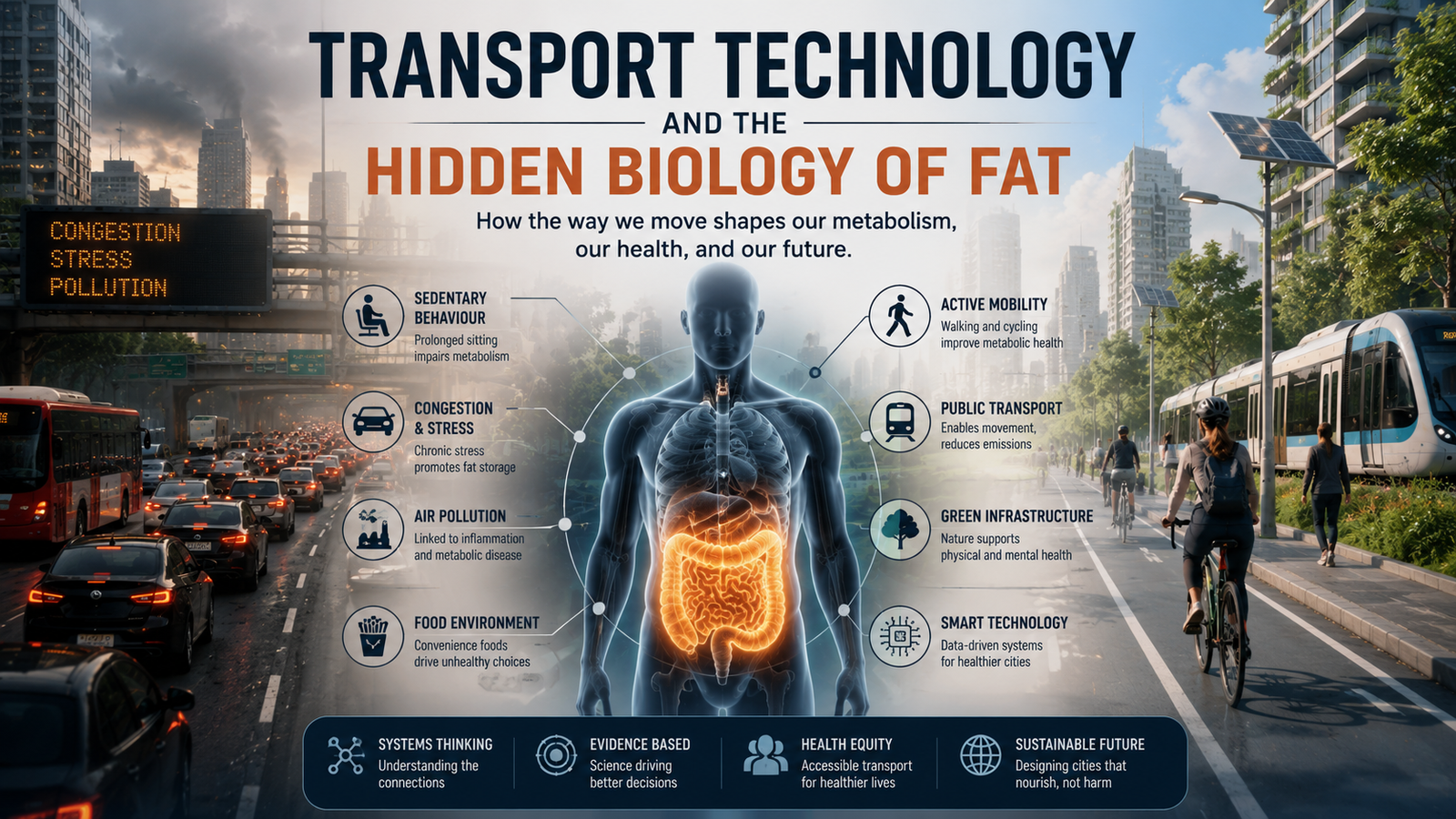
Public health responses should therefore include heat-adapted environments that preserve movement: shaded walking routes, green spaces, cooler sleep environments, active transport infrastructure, and urban design that supports physical activity even during warmer conditions.
For individuals, especially those with pre-diabetes or central adiposity risk, the key lesson is to protect the main metabolic levers: regular movement, preserved muscle mass, stable sleep, controlled energy intake, hydration without sugar-sweetened drinks, and an environment designed to make healthy behaviour easier.
Article
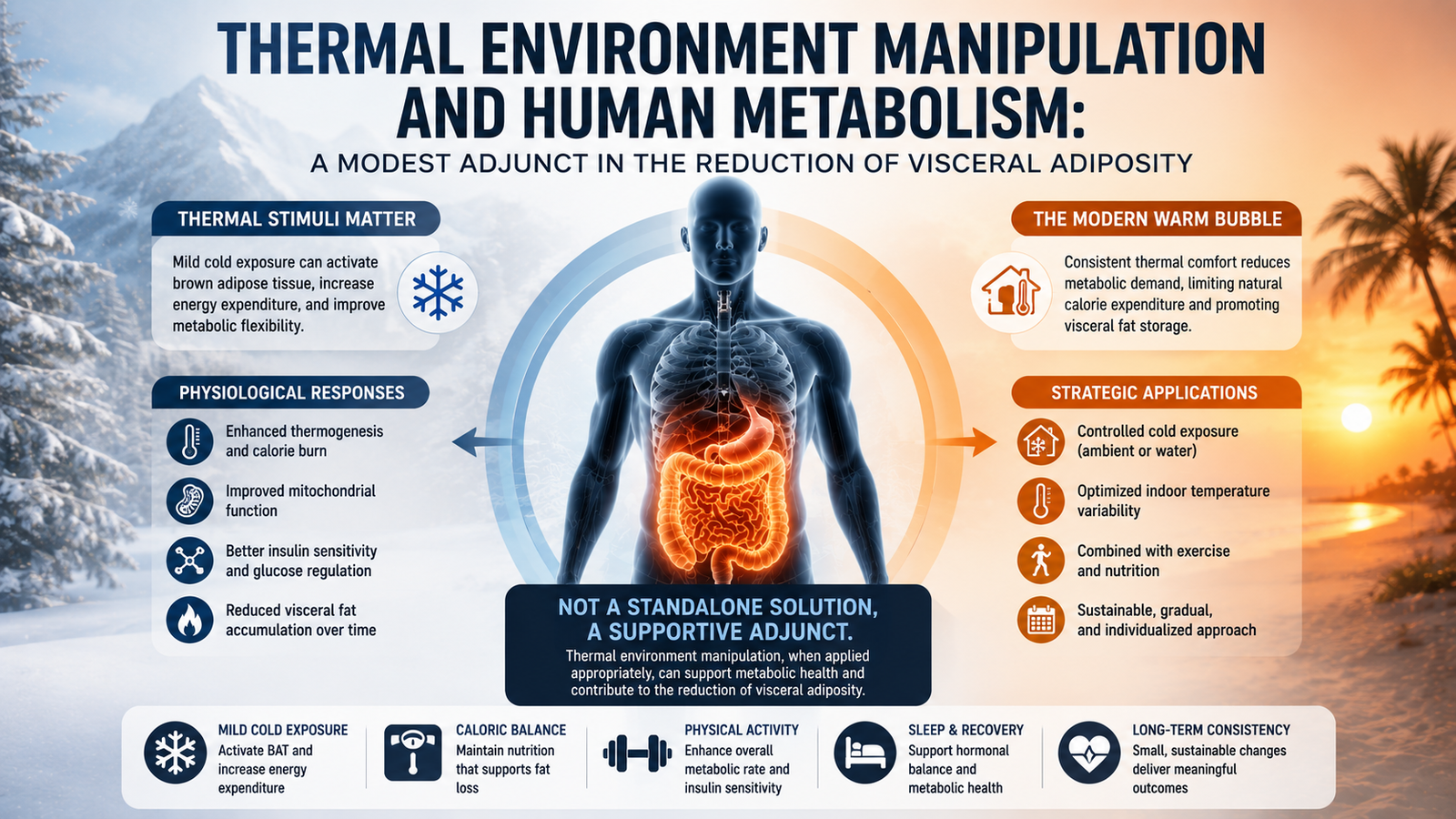
Modern climate-controlled civilisation has progressively reduced humanity’s exposure to environmental thermal variability, altering long-established physiological adaptation mechanisms. This article examines the relationship between global warming, technological adaptation, infrastructure design, behavioural modification, and the increasing prevalence of visceral adiposity. Rather than viewing obesity solely through caloric imbalance or individual behavioural failure, the paper approaches metabolic dysfunction as a systems-level adaptive response emerging from modern environmental conditions.
The study explores how thermal regulation, energy conservation, urban infrastructure, transportation systems, indoor climate control, and reduced environmental exposure collectively influence hormonal regulation, metabolic flexibility, and fat distribution. It argues that persistent artificial thermal stability may reduce adaptive metabolic demand, contributing to chronic energy storage and altered physiological resilience. The paper also considers how modern responses to climate change — including intensified cooling systems, indoor living, automation, and reduced physical environmental interaction — may unintentionally reinforce sedentary behavioural systems associated with visceral fat accumulation.
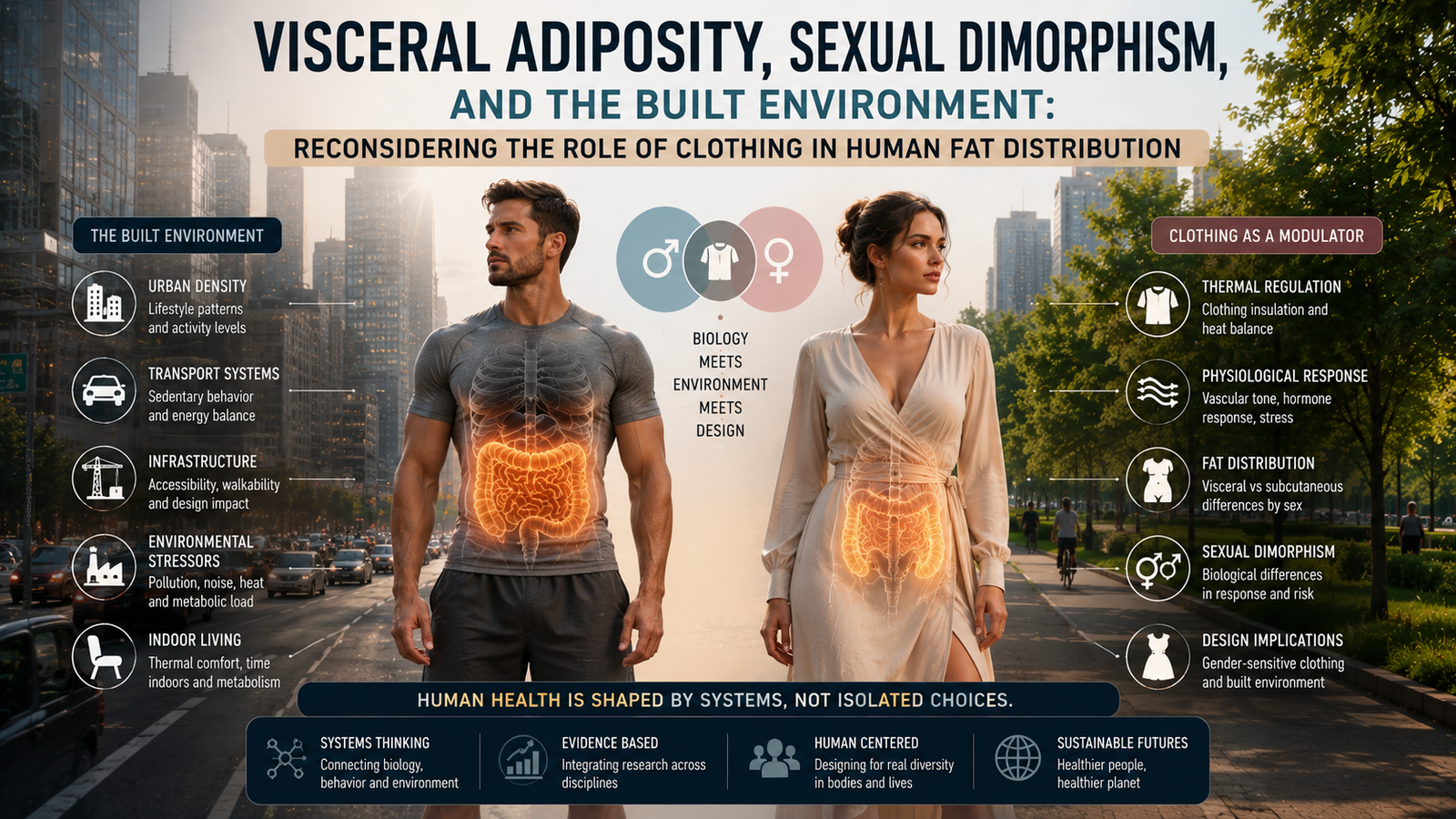
Drawing parallels between engineered systems and biological regulation, the article proposes that human metabolism should be understood within the context of environmental inputs, adaptive feedback loops, and infrastructural design rather than isolated lifestyle choices alone. The analysis integrates concepts from systems engineering, public health, environmental science, behavioural physiology, and sustainability studies to propose a broader interdisciplinary framework for understanding metabolic disease in technologically advanced societies.
The paper concludes that long-term public health strategies may require not merely nutritional intervention, but reconsideration of how modern built environments, thermal management systems, transport infrastructure, and patterns of human environmental exposure shape physiological adaptation. It argues that climate adaptation strategies should account for both environmental sustainability and the biological consequences of increasingly engineered living conditions.
Related Research