Reframing the Problem
This article is not primarily about obesity, nor solely about spaceflight. It is about environmental design and its consequences for human physiological function.
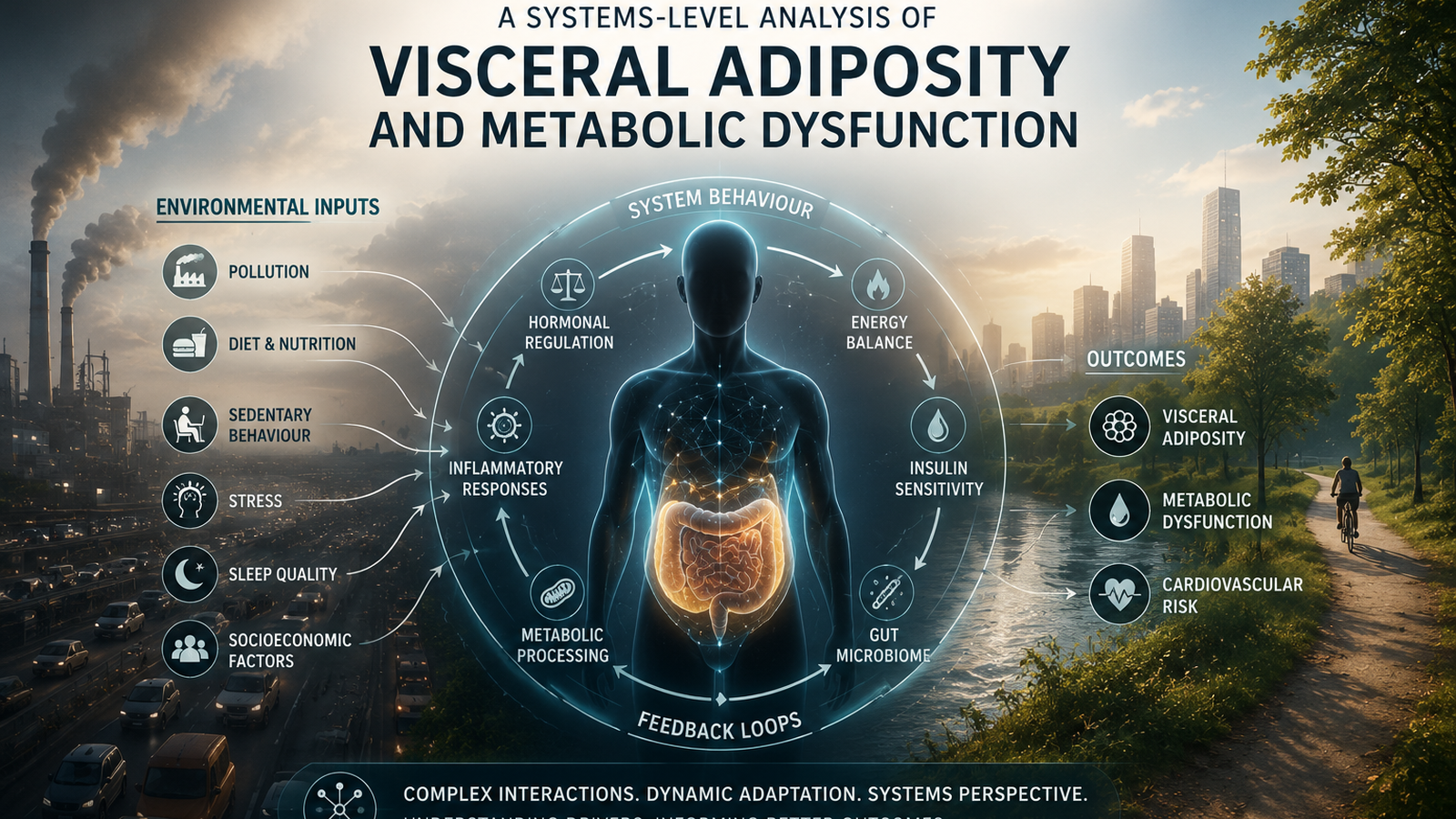
In public discussion, visceral adiposity is often explained through individual behaviour: too much food, too little exercise, poor habits, or lack of discipline. These factors matter, but they do not fully explain why metabolic dysfunction has become so widespread across modern societies.
A different perspective emerges when the human body is viewed as a system continuously interacting with its physical environment. The environment is not merely a backdrop to behaviour. It supplies the demands, signals and constraints to which the body adapts.
The central argument of this paper is that the human body deteriorates when the environment removes the need for regular loading, movement, thermal challenge and muscular effort.
Microgravity as the Extreme Case
The International Space Station provides a powerful example. In orbit, gravitational loading is almost absent. Astronauts no longer need to support their own body weight, resist gravity during movement, or maintain the same postural engagement required on Earth.
The consequences are rapid and measurable. Astronauts experience muscle loss, bone demineralisation, impaired coordination and reduced insulin sensitivity, even though they are carefully monitored, well nourished and provided with structured exercise countermeasures.
This matters because it shows that environmental loading is not optional. It is a regulatory input. Human physiological systems require continuous mechanical and environmental challenge in order to maintain normal function.
Modern Earth as a Low-Load Environment
Modern life is not microgravity. But many modern environments reduce the functional effect of gravity in milder, cumulative ways.
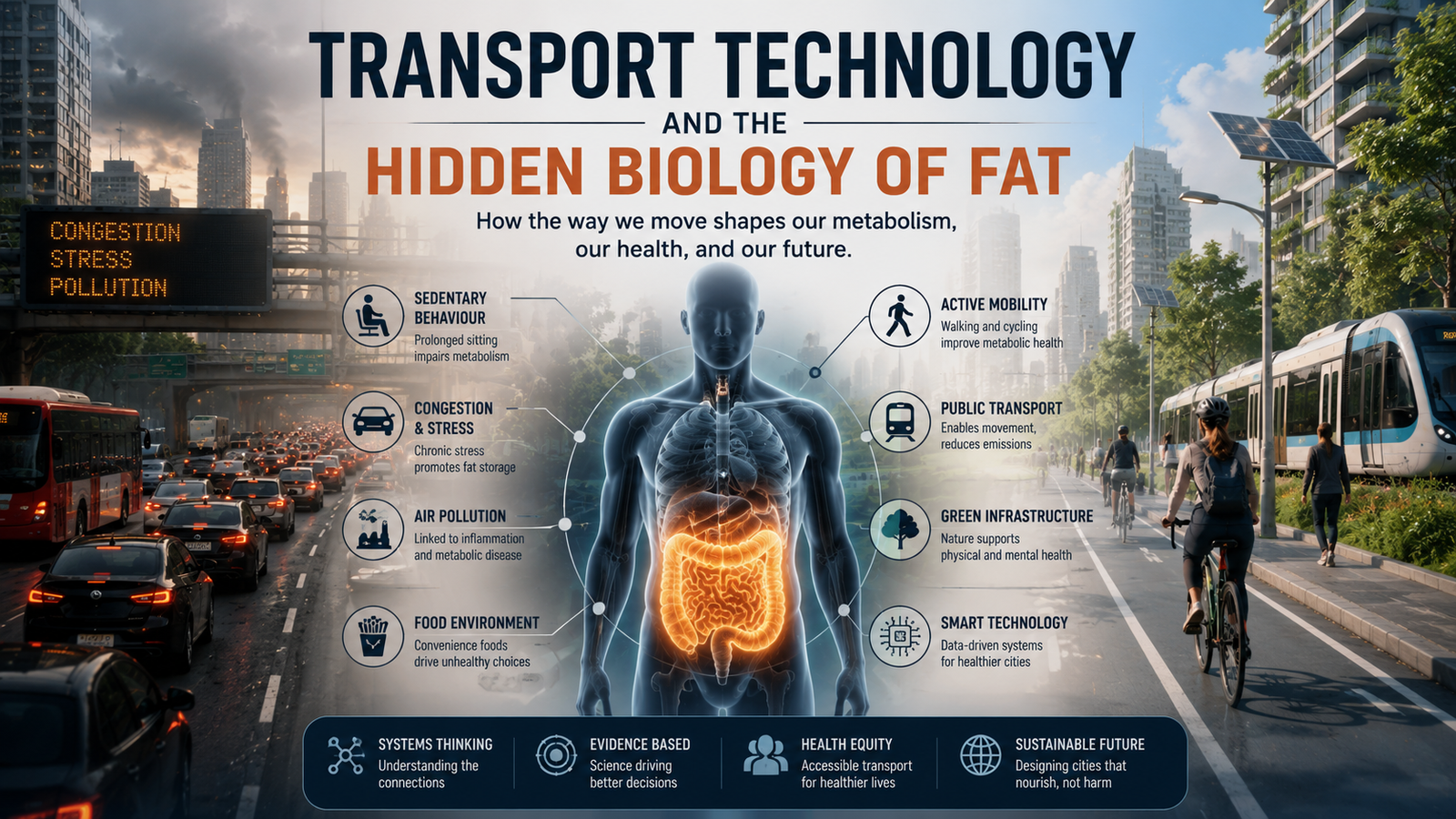
Chairs remove the need for postural support. Cars and lifts reduce locomotor demand. Flat floors and stabilised buildings reduce balance and micro-adjustment. Climate control removes thermal stress. Labour-saving technologies reduce everyday physical effort.
Each development is individually useful. Together, however, they create a low-load environment in which continuous mechanical engagement is no longer required.
Within this framework, visceral adiposity can be reconsidered as part of a broader response to chronic underloading. Reduced muscle activation lowers glucose uptake and energy expenditure. Reduced skeletal loading affects bone and endocrine signalling. Reduced movement variability simplifies neurological and proprioceptive engagement. These factors interact to favour metabolic decline and abdominal fat accumulation.
The Mechanical–Metabolic Axis
The paper describes a mechanical–metabolic axis linking muscle, bone, glucose regulation and neural function.
Skeletal muscle is not merely a structure for movement. It is a major metabolic organ, responsible for much of the body’s glucose uptake and involved in endocrine signalling through myokines. When muscle activation falls, glucose disposal declines and energy is more readily stored.
Bone also responds to mechanical strain. When loading falls below maintenance thresholds, bone resorption can exceed formation. This is clearly seen in spaceflight, but the same principle applies more gradually in low-load terrestrial environments.
The nervous system is also affected. Balance, coordination and proprioception depend on repeated interaction with a variable physical environment. When environments become too stable, predictable and supported, the body receives fewer signals requiring adaptation.
Why Exercise Alone Is Not Enough
Exercise is valuable, but the paper argues that intermittent exercise cannot fully replace an environment that provides continuous demand.
In spaceflight, even intensive scheduled exercise cannot completely prevent physiological decline in microgravity. The same principle applies on Earth. A short period of exercise may not fully compensate for a day otherwise spent seated, supported, transported and thermally neutral.
The issue is therefore not only whether people exercise. It is whether ordinary life still requires the body to work.
Artificial Gravity as a Design Principle
Artificial gravity is usually discussed as a space technology: a way of restoring gravitational loading through rotational systems or other engineered solutions. This paper extends the concept more broadly.
Artificial gravity can also be understood as a design principle: environments should provide sufficient mechanical stimulus to maintain physiological systems.
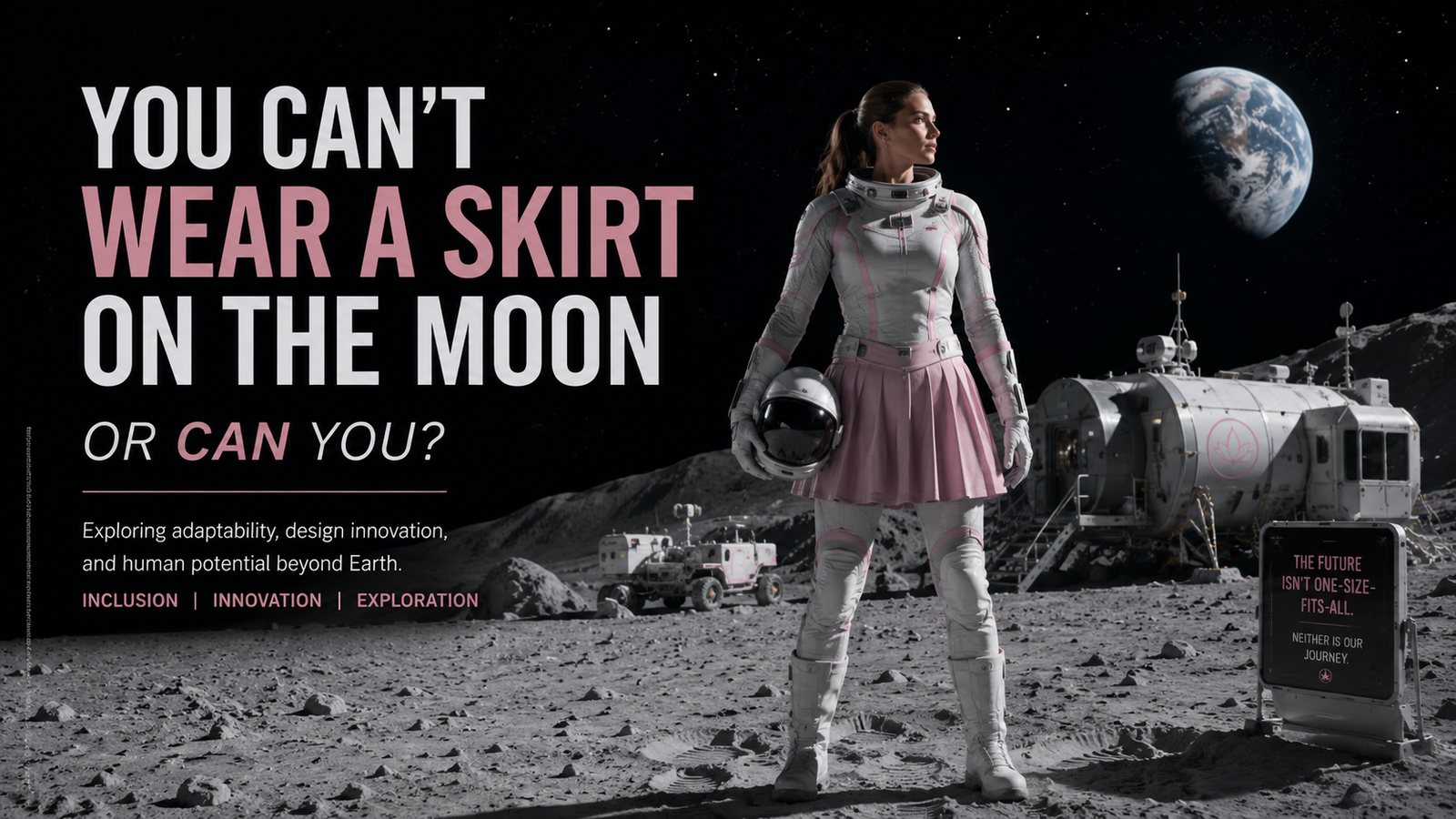
On Earth, this means designing homes, workplaces, cities and transport systems that restore load, movement, posture change, balance, effort and environmental variation. In space, it means recognising that lunar or Martian habitats must not become passive, low-demand interiors in which humans are merely transported, seated and automated.
Lunar and Martian Implications
The paper also considers future habitation in reduced-gravity environments. Lunar gravity is about one-sixth of Earth’s gravity. Mars gravity is higher, but still substantially reduced. These are not zero-load environments, but they may still provide insufficient mechanical stimulus for long-term physiological maintenance.
This raises the possibility of a distinct low-gravity physiology: reduced muscle mass, reduced bone density, altered movement patterns, lower metabolic demand and greater vulnerability when returning to Earth gravity.
The appendix develops this concern through the “autonomous passenger problem”. If future Mars exploration relies heavily on autonomous vehicles in which astronauts sit passively while machines perform the environmental interaction, humanity may export sedentary civilisation into space.
Conclusion
The central conclusion is that health is not simply something individuals choose. It is something environments permit or prevent.
When environments remove the need for the body to work, the body adapts by doing less. That adaptation may be efficient in the short term, but over time it can lead to reduced capacity, metabolic dysfunction and visceral adiposity.
To restore metabolic health, the solution cannot be limited to personal motivation or scheduled exercise. Environments themselves must be redesigned to reintroduce continuous demand: load, movement, variability, effort and challenge.
The principles required to sustain human life in space therefore have direct relevance on Earth. Whether on Earth, on the Moon, or on Mars, human bodies need environments that keep them active, loaded, adaptive and resilient.